Tai Chi for Pregnancy

A gentle, on-demand Tai Chi course for both you and your baby. Slow, low-impact, non-jarring movement that works with your changing body through every trimester.

Tai Chi for Pregnancy

A gentle, on-demand Tai Chi course for both you and your baby. Slow, low-impact, non-jarring movement that works with your changing body through every trimester.

Pregnancy exercise, by ACOG's own specification

The American College of Obstetricians and Gynecologists (ACOG) names three physical challenges that pregnancy places on the body:

Loosening ligaments that destabilize joints (so jerky, bouncy, high-impact motion is to be avoided)

Shifting center of gravity that raises fall risk (so balance work matters)

Increased oxygen demand that makes strenuous exertion harder to sustain (so gentle, paced movement is better).

Tai Chi is the inverse of every risk ACOG warns against. Gentle. Continuous. Low-impact. Built around balance. It meets the ACOG definition of what pregnancy exercise should be.

  • ACOG's listed benefits of regular pregnancy exercise — all of which Tai Chi provides:

    • Reduces back pain
    • Tai Chi is practiced upright which avoids the uterus pressing on a large vein that returns blood to the heart
    • May decrease risk of gestational diabetes, preeclampsia, and cesarean delivery
    • Improves general fitness and strengthens cardiovascular function
    • Eases constipation
    • Promotes healthy weight gain during pregnancy
    • Supports postpartum recovery and weight loss after birth
Research-backed benefits

What the broader research on Tai Chi has established — for balance, breath, and the mind — carries forward into a pregnancy-adapted practice. With some caveats worth naming plainly.

A note on the research.

Tai Chi has been studied extensively for balance, anxiety, sleep, and cardiovascular health in general adult populations — the evidence base there is large and well established. Research specifically on Tai Chi in pregnant women is still a small field. The most cited direct study is a 2013 randomized trial of 92 prenatally depressed women that found measurable reductions in depression, anxiety, and sleep disturbance from a short weekly practice. Beyond that, we are reasoning from adjacent evidence and clinical logic. We say this plainly because you deserve to know.

Field et al. · Complementary Therapies in Clinical Practice · 2013

In the Chinese medicine view

In Traditional Chinese Medicine, pregnancy is understood as a period of deep balancing between yin and yang — the body drawing on its reserves of qi and blood to nourish the growing child. The kidney and spleen systems — which in TCM theory govern reproductive vitality and the holding of the fetus — are under particular demand.

Tai Chi is recognized as one of the foremost practices for cultivating and conserving qi. Where strenuous exercise is understood to deplete, Tai Chi’s slow, rooted, breath-coordinated movement is understood to nourish — replenishing rather than spending, gathering rather than scattering. The work is internal as much as external.

For pregnancy, this is the practice meeting the body where it is. A form of movement that supports increased vitality needs without drawing down reserves. A way of carrying yourself through the nine months that is steady, grounded, and in relationship with the life taking shape inside you.

After I had my baby, my pelvis was anteriorly rotated and my gait had widened from the loosening of ligaments and the pregnancy waddle. Because Tai Chi is about keeping the pelvic area in alignment and moving as one unit, I was able to use it to restore my gait and correct the rotation.


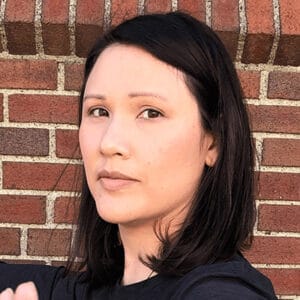
Frances Phelps, Instructor

Frances Phelps

Frances Phelps

Frances is a Chen-style Taiji practitioner based in Massachusetts, where she teaches online and in person with a focus on using Tai Chi for relaxation and overall well-being. She also designs and manages the website and social media for Chi Force.

She filmed this course during her third trimester, when Tai Chi had become her go-to practice. Built around Silk Reeling, the routine is gentle and nourishing for both mother and baby; a quiet way of loving yourself and the little one growing inside you.

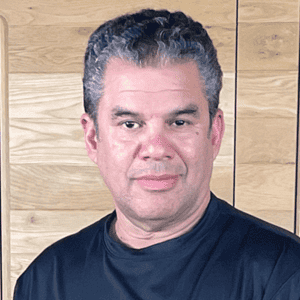
Stephan Berwick

Advisor, Stephan Berwick

Stephan Berwick is Frances’s teacher and advised on the curriculum for this course. He founded True Tai Chi™ in Northern Virginia, one of the few branch schools of the Chen Village Tai Chi Academy in Tai Chi’s birthplace.

Among the first Americans trained professionally in China, he later performed in Hong Kong action films and co-produced HarperCollins’s Art of the Straight Line on Lou Reed’s Tai Chi practice. He also serves as a strategist at Chi Force.

The course, or the complete practice.

Start with the pregnancy course on its own, or take the complete bundle, adding the principles behind every movement, and more of the silk reeling practice the course is drawn from.

Pregnancy Complete

$88.00
  • Tai Chi for Pregnancy course
  • Fundamentals - the posture, alignment, and principles
  • Silk Reeling - more in-depth explanation and practice of Silk Reeling
  • Lifetime access to all materials and updates

Tai Chi for Pregnancy

$46.00
  • Suitable for complete beginners
  • Lifetime access to all materials and updates
  • Warm up and core movements
  • Silk Reeling - single, and dual-arm, and push/pull sequences